Blog

Cyber Security Design Studies, Papers, Books, and Resources

December 19, 2020

The cyber security design principles emphasize psychology over technology. Here is a collection of scientific studies, research papers, design books, and related resources.

This is part of a series on designing cyber security capabilities. To see other articles in the series, including a full list of design principles, click here.

Paths They Take

Number of steps; Familiarity of each step; Friction at each step.

Introduction to Customer Journey Mapping (ebook)

Flow Design Processes – Focusing on the Users’ Needs

Scientific Articles

Shosuke Suzuki, Victoria M. Lawlor, Jessica A. Cooper, Amanda R. Arulpragasam, Michael T. Treadway. Distinct regions of the striatum underlying effort, movement initiation and effort discounting. Nature Human Behaviour, 2020; DOI: 10.1038/s41562-020-00972-y

G. Suri, G. Sheppes, C. Schwartz, J. J. Gross. Patient Inertia and the Status Quo Bias: When an Inferior Option Is Preferred. Psychological Science, 2013; DOI: 10.1177/0956797613479976

Julia Watzek, Sarah F. Brosnan. Capuchin and rhesus monkeys show sunk cost effects in a psychomotor task. Scientific Reports, 2020; 10 (1) DOI: 10.1038/s41598-020-77301-wBongiorno,

Basu, R., Gebauer, R., Herfurth, T. et al. The orbitofrontal cortex maps future navigational goals. Nature, 2021 // How do goal maps guide the brain toward a destination? 

C., Zhou, Y., Kryven, M. et al. Vector-based pedestrian navigation in cities. Nat Comput Sci, 2021 DOI: 10.1038/s43588-021-00130-y. // People don’t follow the shortest path. They follow the easiest path to recall and follow. That is, the pointiest path.

Li Zheng, Zhiyao Gao, Andrew S. McAvan, Eve A. Isham, Arne D. Ekstrom. Partially overlapping spatial environments trigger reinstatement in hippocampus and schema representations in prefrontal cortex. Nature Communications, 2021 // Navigating an environment that’s sort of similar but not, is harder than navigating an entirely new environment.


Choices They Make

Number of choices; Predictability of the choice; Cognitive load of each choice.

Nudge to Health: Harnessing Decision Research to Promote Health Behavior

Sludge: “activities that are essentially nudging for evil”

Intentional and Unintentional Sludge

Books

Choosing Not to Choose, by Cass Sunstein

How to Decide: Simple Tools for Making Better Choices, by Annie Duke

Being Wrong: Adventures in the Margin of Error, by Kathryn Schulz

Think Again: The Power of Knowing What You Don’t Know, by Adam Grant

Scientific Articles

Sunstein, C. (2020). Sludge AuditsBehavioural Public Policy, 1-20. doi:10.1017/bpp.2019.32

Soman, Dilip and Cowen, Daniel and Kannan, Niketana and Feng, Bing, Seeing Sludge: Towards a Dashboard to Help Organizations Recognize Impedance to End-User Decisions and Action (September 27, 2019). Research Report Series Behaviourally Informed Organizations Partnership; Behavioural Economics in Action at Rotman, September 2019

Chadd, I., Filiz-Ozbay, E. & Ozbay, E.Y. The relevance of irrelevant informationExp Econ (2020). // Unavailable options and irrelevant information often cause people to make bad choices. The likelihood of poor decisions is even greater when people are presented with both.

Thomas L. Saltsman, Mark D. Seery, Deborah E. Ward, Veronica M. Lamarche, Cheryl L. Kondrak. Is satisficing really satisfying? Satisficers exhibit greater threat than maximizers during choice overload. Psychophysiology (2020). // To get past frustration, satisficers make a speedy choice instead of thinking too deeply about the choices being presented.

Stuart Mills. Personalized Nudging. Cambridge University Press (2020). // Choice architects can personalize both the choices being nudged towards (choice personalization) and the method of nudging itself (delivery personalization).

Stephanie Mertens, Mario Herberz, Ulf J. J. Hahnel, Tobias Brosch. The effectiveness of nudging: A meta-analysis of choice architecture interventions across behavioral domains. Proceedings of the National Academy of Sciences, 2022. // Over 450 strategies analyzed, with nudges across three groups: “information,” “structure” and “assistance.” Strong proof of nudging over mandates for leading to behavior change.

Gabrielle S. Adams, Benjamin A. Converse, Andrew H. Hales, Leidy E. Klotz. People systematically overlook subtractive changes. Nature, 2021. // People approaching a problem rarely think removing something as a solution. People almost always add something whether it helps or not.

Cary Frydman, Ian Krajbich. Using Response Times to Infer Others’ Private Information: An Application to Information Cascades. Management Science, 2021. // If people in a group pause when making a decision, other people are twice as likely to break from the group to make their own choice.

Narayan Ramasubbu and Indranil R. Bardhan. Reconfiguring for Agility: Examining the Performance Implications for Project Team Autonomy Through an Organizational Policy Experiment. MIS Quarterly, 2021. // More freedom means greater productivity and better customer satisfaction. By contrast, more top-down governance results in lower productivity and customer satisfaction.

Blair R. K. Shevlin, Stephanie M. Smith, Jan Hausfeld, Ian Krajbich. High-value decisions are fast and accurate, inconsistent with diminishing value sensitivity. Proceedings of the National Academy of Sciences, 2022.

Nancy Padilla-Coreano, Kanha Batra, Makenzie Patarino, Zexin Chen, et al. Cortical ensembles orchestrate social competition through hypothalamic outputsNature, 2022. // Study on mice to determine how the brain encodes social rank and “winning mindset”.

Behavior

The behavior we want people to perform.

Scientific Articles

Hall, Jonathan D. and Madsen, Joshua, Can Behavioral Interventions Be Too Salient? Evidence From Traffic Safety Messages (September 16, 2020).

Robison, M. K., Unsworth, N., & Brewer, G. A. Examining the effects of goal-setting, feedback, and incentives on sustained attention. (August 7, 2021). // Providing feedback on performance is a strong motivator and sustains attention over a longer-term than goal-setting alone.

Kevin P. Grubiak, Andrea Isoni, Robert Sugden, Mengjie Wang, Jiwei Zheng. Taking the New Year’s Resolution Test seriously: eliciting individuals’ judgements about self-control and spontaneity. Behavioural Public Policy, 2022. // “Individuals often make resolutions in January to maintain healthy lifestyle regimes — for example to eat better or exercise more often — then fail to keep them. Behavioural scientists frequently interpret such behaviour as evidence of a conflict between two ‘selves’ of a person — a Planner (in charge of self-control) and a Doer (who responds spontaneously to the temptations of the moment). Public policies designed to ‘nudge’ people towards healthy lifestyles are often justified on the grounds that people think of their Planners as their true selves and disown the actions of their Doers. However, the authors argue this justification overlooks the possibility that people value spontaneity as well as self-control, and approve of their own flexible attitudes to resolutions.”

Qi Su, Alex McAvoy and Joshua B. Plotkin. Evolution of cooperation with contextualized behavior. Science Advances, 2022.

Gareth J. Hollands, Juliet A. Usher-Smith, Rana Hasan, Florence Alexander, Natasha Clarke, Simon J. Griffin. Visualising health risks with medical imaging for changing recipients’ health behaviours and risk factors: Systematic review with meta-analysis. PLOS Medicine, 2022. // Improved visualization leads to risk-reducing behaviors. 

Barriers

Barriers preventing people from completing the behavior.

Scientific Articles

Helen Demetriou, Bill Nicholl. Empathy is the mother of invention: Emotion and cognition for creativity in the classroom. Improving Schools (2021).

Rachel C. Forbes and Jennifer E. Stellar. When the Ones We Love Misbehave: Exploring Moral Processes Within Intimate Bonds. Journal of Personality and Social Psychology, 2021 // This applies to security champion and security advocate programs. Tighter relationships mean more forgiveness, which in turn provides more room for the security team to maneuver. 

Benefits

Benefits of completing the behavior.

Scientific Articles

Nicole Abi-Esber, Jennifer Abel, Francesca Gino, Juliana Schroeder. Just Letting You Know: Underestimating Others Desire for Constructive FeedbackJournal of Personality and Social Psychology, 2022. // A series of five experiments involving 1,984 participants to measure how much people underestimate others’ desire for constructive feedback. People want feedback.

Flow (Concentration) 

Benefits of completing the behavior.

Scientific Articles

loria Mark, Mary Czerwinski, and Shamsi T. Iqbal. Effects of Individual Differences in Blocking Workplace Distractions. Proceedings of the 2018 CHI Conference on Human Factors in Computing Systems, 2018. // Security needs to be extremely careful not to overload people’s already overloaded attention. Check this for strategies people use to manage (ignore?) notifications. 

Richard Huskey, Justin Robert Keene, Shelby Wilcox, Xuanjun (Jason) Gong, Robyn Adams, Christina J Najera, Flexible and Modular Brain Network Dynamics Characterize Flow Experiences During Media Use: A Functional Magnetic Resonance Imaging StudyJournal of Communication, 2021. // The sweet spot is when “activities are engaging enough to fully involve someone to the point of barely being distracted, but not so difficult that the activity becomes frustrating.”

Training (Ignorance)

Scientific Articles

Nesra Yannier, Scott E. Hudson, Kenneth R. Koedinger, Kathy Hirsh-Pasek, Roberta Michnick Golinkoff, Yuko Munakata, Sabine Doebel, Daniel L. Schwartz, Louis Deslauriers, Logan McCarty, Kristina Callaghan, Elli J. Theobald, Scott Freeman, Katelyn M. Cooper, Sara E. Brownell. Active learning: “Hands-on” meets “minds-on”. Science, 2020 // It’s no surprise that hands-on training exceeds lecture. But who does that in security? These researchers evaluate and share ways to make learning active. 

Irrationality

40 Clever and Creative Bus Stop Advertisements

Scientific Articles

Vadiveloo, M. K., Dixon, L. B., & Elbel, B. (2011). Consumer purchasing patterns in response to calorie labeling legislation in New York City. The International Journal of Behavioral Nutrition and Physical Activity, 8(1), 51-51.

Fernandes, D., Lynch, J. G., & Netemeyer, R. G. (2014). Financial literacy, financial education, and downstream financial behaviors. Management Science, 60(8), 1861-1883.

Beisswingert, B. M., Zhang, K., Goetz, T., Fang, P., & Fischbacher, U. (2015). The effects of subjective loss of control on risk-taking behavior: the mediating role of anger. Frontiers in psychology, 6, 774.

Yana Fandakova, Elliott G Johnson, Simona Ghetti. Distinct neural mechanisms underlie subjective and objective recollection and guide memory-based decision making. eLife, 2021. // Memory involves both recall of specific details (who, where, when) and feelings of remembering and reliving past events. New research shows that these objective and subjective memories function independently, involve different parts of the brain, and that we make decisions based on subjective memory.

Elizabeth A. Minton, T. Bettina Cornwell, Hong Yuan. I know what you are thinking: How theory of mind is employed in product evaluations. Journal of Business Research, 2021

Adrian R. Walker, Danielle J. Navarro, Ben R. Newell, Tom Beesley. Protection from uncertainty in the exploration/exploitation trade-off. Journal of Experimental Psychology: Learning, Memory, and Cognition, 2021.

Investments

More people, better technology.

Scientific Articles

Incentives

Books

Drive: The Surprising Truth About What Motivates Us, by Daniel H. Pink

Scientific Articles

Gneezy, U., & Rustichini, A. (2000). A Fine is a Price. The Journal of Legal Studies, 29(1), 1–17. doi: 10.1086/468061

Rey-Biel, Pedro & Gneezy, Uri & Meier, Stephan. (2011). When and Why Incentives (Don’t) Work to Modify Behavior. Journal of Economic Perspectives. 25. 191-210. 10.2307/41337236.

University of Pennsylvania. (2021, January 19). Money matters to happiness–perhaps more than previously thought

Johnny Långstedt. How will our Values Fit Future Work? An Empirical Exploration of Basic Values and Susceptibility to Automation. Labour & Industry: a journal of the social and economic relations of work, 2021. // A look at the intrinsic value people feel from doing the work.

Georgia Clay, Christopher Mlynski, Franziska M. Korb, Thomas Goschke, and Veronika Job. Rewarding cognitive effort increases the intrinsic value of mental labor. PNAS, 2022. // If people are rewarded for their effort, it motivates them to seek further challenging tasks that are not rewarded.

Metrics

Books

How to Measure Anything in Cybersecurity Risk, by Douglas W. Hubbard, Richard Seiersen

Scientific Articles

Adam Beautement, Ingolf Becker, Simon Parkin, Kat Krol, and M. Angela Sasse. 2016. Productive security: a scalable methodology for analysing employee security behaviours. In Proceedings of the Twelfth USENIX Conference on Usable Privacy and Security (SOUPS ’16). USENIX Association, USA, 253–270.

Behavior Economics

From “Economic Man” to Behavioral Economics

Related Books

  • The design of everyday things, by Don Norman
  • Designing for the digital age: How to create human-centered products and services, by Kim Goodwin
  • Design research: Methods and perspectives, by Brenda Laurel
  • User experience revolution, by Paul Boag

Presentations

Does security have a design problem? Designing Security for Systems that are Bigger on the Inside.

How does design apply to securing application development and DevOps? Securing without Slowing.

How does design apply to BYOD and Cloud apps? Security Design Strategies for the Age of BYO.

How does design apply to blue teaming? Design Thinking for Blue Teams.

Design Thinking for Blue Teams at Converge Detroit

December 6, 2020

Usability versus security is stupid. It forces us to choose one or the other. It excuses security breaches under the guise of usability. It automatically pits us against them, builders against breakers, developers against defenders. A better approach is to view security like usability: they happen where man meets machine. At that moment of meeting, what factors in human psychology and industrial design are at play? And suppose we could pause time. Suppose we could tease out those factors. Could we design a better experience, design a better outcome, design a better path to the future?

Recorded for Converge Detroit 2020

Watch more videos on my YouTube channel.

Killing Passwords with Infosecurity Magazine

December 1, 2020

Back in September, Gartner detailed its top eight security projects for the coming year. Among those was the concept of ‘passwordless’ authentication, where a second factor such as a known asset like a phone, tablet, keyfob or smart watch can be used instead of a password.

Excerpt from: Interview: J Wolfgang Goerlich, Advisory CISO, Duo Security (Cisco)

Speaking to Infosecurity, Goerlich cited a talk at the 2004 RSA Conference, where Bill Gates said that the password is dead, and Goerlich commented that “16 years later we’re still trying to kill it.” He said that to enable a passwordless strategy, you need both the equipment and technology to enable it, but mostly you need “to have momentum in the organization and a reason to do it.”

However, now that everyone carries a biometric authenticator in their pocket, has hardware in place and given the fact that security wants to enable users, why do passwords still exist? 

Read the full article: https://www.infosecurity-magazine.com/interviews/interview-wolfgang-cisco-duo/

Wolf’s Additional Thoughts

What leads one innovation to succeed? What leads another innovation to stall? We need standards, infrastructure, and critical mass. But these come often out of order and require a spark to bring it all together. Sixteen years after Bill Gates declared the password dead, we’ve reached the inflection point. It’s about to get exciting.

The final thought in the article is “He concluded by saying that increasing trust in authentication is vital for passwordless to succeed, as today’s good factor is bypassed tomorrow. “

My strong recommendation is pairing passwordless with additional anti-fraud measures. Include the device identification in the authentication. Include behavior analytics (where, when, how) to further bolster trust in the authentication. We can predict criminals will work around these authentication methods, so let’s move now to put in place compensating controls to detect and prevent their next move.


This post is an excerpt from a press article. To see other media mentions and press coverage, click to view the Media page or the News category. Do you want to interview Wolf for a similar article? Contact Wolf through his media request form.

Minimum Viable Security – Design Monday

November 30, 2020

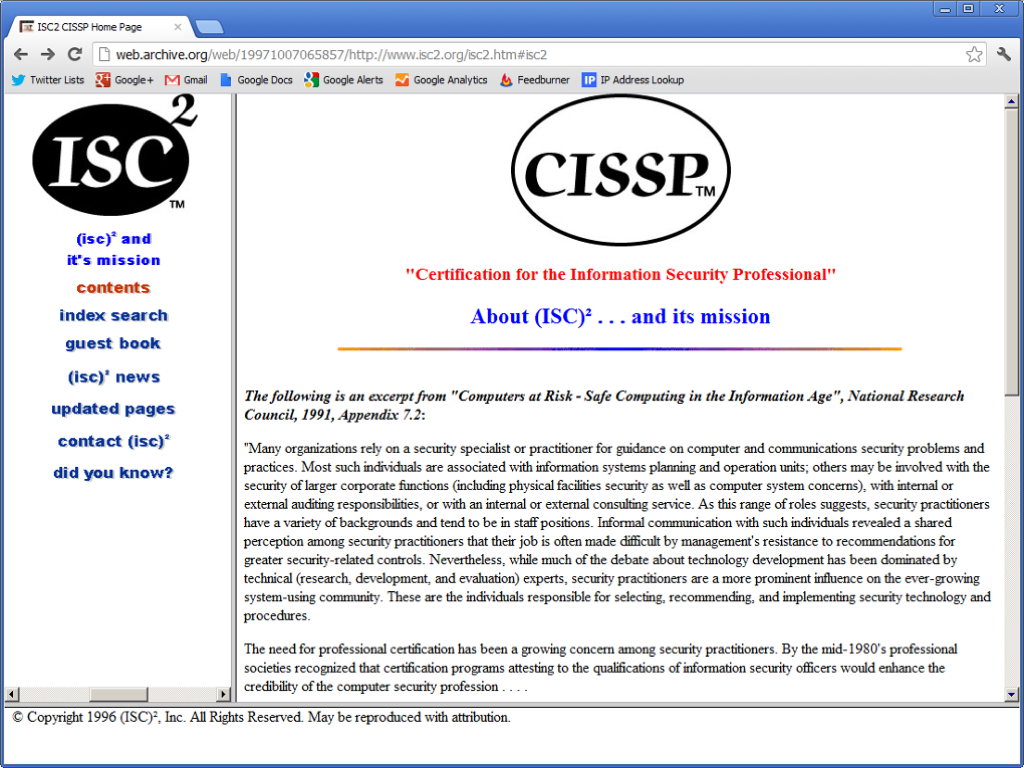
My focus on IT security began in 1997 with a malware outbreak. To get a sense of how much has changed, I checked out the (ISC)² website as it existed back then. Whoa. It’s ugly. The website and the views on cyber security have drastically improved since the nineties.

These days I regularly get asked, “where do we begin?” Privileged Access Management is supposed to look like this. Zero Trust Architecture is supposed to look like that. We only have a these two things, a paperclip, some duct tape, an overworked staff, and an intern. Where do we even start?

Borrowing from the product design world, take a Minimum Viable Product (MVP) strategy. Take a limited number of security controls. Take a limited scope of people and systems. Design a security capability, implement it, and get feedback on what works and where improvements are needed. Then, rinse and repeat with refined controls and in a new area of the organization.

A concern is that this process may lead to a patchwork of controls assembled from a tangle of point solutions. Valid concern. We’ve all seen such environments. A few of us have been lucky enough to build such mistakes, and learn from them. The way to avoid this is to use a consistent set of architecture patterns and project templates. Each sprint begins with these patterns and plans. Each one ends with updating the architecture and PMO libraries. It’ll be ugly, but with a controlled process, it’ll improve rapidly.

Criminals don’t care that we got the capability perfect. Adversaries aren’t impressed with the beauty of our control framework. So toss out the textbook.

Start where you are. Dare to be ugly. Iterate and improve.

The (ISC)² CISSP webpage from 1997, courtesy of The Internet Archive.

This article is part of a series on designing cyber security capabilities. To see other articles in the series, including a full list of design principles, click here.

Hold a value, make a decision, change a life – Design Monday

November 23, 2020

“Develop people, develop security.” That was our tagline for the SimWitty team. The order reflected our values and simplified decisions. What to prioritize, developing a skill in a teammate or getting a release out the door? When develop people comes first, the answer is clear.

“Make a loan, change a life.” That’s Kiva’s tagline. Kiva has significantly more impact on broader social issues than SimWitty ever had, and it’s barely a comparison. There is one thing both have in common: values reflected in slogans resulting in decisions.

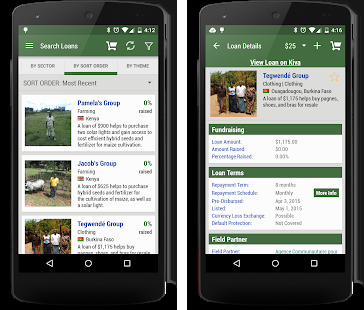
Kiva had a challenge. While its goal was to change lives through loans to small businesses, most businesses weren’t completing the application. The conversion rate was less than 1 in 5. Kiva looked to make design changes to simplify the application process. Many suggestions were made. One suggestion was particularly counter-intuitive to the point of being controversial: give small businesses a deadline.

“The founder was appalled. By giving customers a deadline, the company would have to deny service to people who missed that deadline. Denying service, the founder argued, was not a part of their company values,” wrote Kristen Berman, founder of Common Cents and Irrational Labs, who championed the design work for Kiva.

Security leaders must bring a degree of clarity to their team. Our values must be clear. Our criteria must be clear. And how we’ll try things and evaluate decisions must be clear. For Kiva, that meant changing lives through access to capital, with the number of people who complete loan applications as one measure. What does it mean for a security team?

Berman’s team went to work and experimented with deadlines. The number of completed applications went up. They experimented with incentives for early completion. Application rates went up further. More small businesses than ever were completing applications, resulting in changing more lives than ever. The decision to move ahead with the approach was clear.

This series has covered security programs reflecting strongly held corporate values. It’s equally important that a security leader have strong personal values, and that these values are reflected within the team. As Kiva’s example illustrates, there are times when options, on the surface, run contrary to our values. The path forward is to have a clear definition of success within those values.

Clarity enables experimentation and innovation while remaining true to what we believe in. Security leaders design capabilities and lead teams that reflect their personal values.

A case study in behavior design to reflect values. Read about the Kiva app redesign here.

This article is part of a series on designing cyber security capabilities. To see other articles in the series, including a full list of design principles, click here.

Anti-patterns and Patterns for Directing Security Projects – Design Monday

November 16, 2020

An implementation is like a movie, directed by leadership and produced by project management. Successful security implementation projects start strong, start with style, start like movies. As projects are running, what else can cinema teach us?

I began this series of cyber security design principles with an insight: to see things differently, look at different things. Spend a week with an artist, designer, or director. Find a security lesson. Share what I find. Sometimes my process is easy, sometimes difficult. Yet no one has challenged me more than Federico Fellini.

Federico Fellini. Distinctive, acclaimed, the Italian filmmaker was legendary in the twentieth century. He directed thirty-one films, “was nominated for twelve Academy Awards, and won four in the category of Best Foreign Language Film, the most for any director in the history of the Academy.” You’ve seen a movie scene inspired by (or directly copied from) a Fellini film. It’s guaranteed. Let’s take one example: Fellini’s Casanova. The film follows the titular Casanova on an adventure across Europe, while highlighting what makes Fellini a legendary director and a example for cyber security.  

Anti-patterns in project management from Fellini’s Casanova:

  • Micro-manage your people. “Puppets are happy to be puppets if the puppeteer is good,” Fellini said of his relationship with his actors. Donald Sutherland, who played Casanova, described it as being the worst experience of his filmmaking career. Every action micro-managed and scripted, until nothing of the talented actor remained.
  • Force your people to fit your stereotype of talent. Sutherland is unrecognizable as Casanova. Fellini has him wearing a false chin and nose. He raised Sutherland’s hairline, which then necessitated false eyebrows to even the look out.
  • Over-engineer details that don’t affect the final result. Fellini, unsatisfied with the color and waves from the water, had a plastic simulated lake created for Sutherland to row across. Almost a decade later, furious the color blue wasn’t the right color blue, Fellini would delay production while an entire faux ocean shore was created with plastic sheets for And the Ship Sails On.    

James P. Carse popularized the idea of finite and infinite games. Most games we are familiar with are finite: you play to win, you play to maximize your results at the expense of the other players. Infinite games ongoing: you play to continue others to play. Federico Fellini films were finite games. Sutherland never worked with Fellini again. By contrast, the Golden Age of cinema was an infinite game. (Well, infinite, until it stopped in the 1950s.) Major film studios had in-house production crews and contracted actors. While the roles varied and films came and went, the directors were incentivized to keep the best people playing with them.   

Cyber security in an organization is like the Golden Age of cinema. The leader’s role is encouraging people to want to play with us again and again, implementation after implementation.

Don’t be Fellini. Manage projects with the following patterns:

  • Set the vision and collaborate with people on execution. Listen.
  • Personalize the approach and tasks for the people on the project. Individualize.  
  • Maximize efforts where they matter by minimizing where they don’t. Simplify.

Directing implementation projects is both an art and a game. It is the art of engaging people in an infinite game. Good security projects leave people hungry to play again.

Afterwards

Security is often a story about crime, and criminals often make mistakes even while succeeding. Imagine someone stealing backup tapes to get at stored credit cards, not realizing they were also stealing people’s spreadsheets. In 1975, thieves broke into Technicolor labs and made off with film from 120 Days of Sodom. The heist also swooped up seventy reels of film from Casanova, forcing Fellini to reshoot weeks of material.

A good reminder to classify and protect data according to what criminals value … rather than what a snarky blogger might value.


This article is part of a series on designing cyber security capabilities. To see other articles in the series, including a full list of design principles, click here.

Verizon Taps Cisco, BlackBerry for Internet Security

November 10, 2020

Verizon’s new Business Internet Secure bundle for small businesses taps Cisco and BlackBerry security services to help protect customers’ routers and connected devices. A recent Verizon Business survey found 38% of small businesses moved to remote work because of the COVID-19 pandemic. 

Excerpt from: Verizon Taps Cisco, BlackBerry for Internet Security

To support this transition, Verizon Business Internet Secure protects against threats at two points where attacks typically occur: employee devices with BlackBerry and the internet with Cisco Umbrella.

Even pre-pandemic, small businesses faced the same threats and potential damages from an attack, according to a Cisco security report based on a survey of almost 500 SMBs. The report also found that these companies take security preparedness every bit as seriously as their larger counterparts. And this matters because the security industry has traditionally been biased against SMBs, perpetuating the myth that they don’t prioritize cybersecurity, the report says.

“SMB executives, IT executives, security executives in these businesses have done their best to address the problem,” said Wolfgang Goerlich, advisory CISO at Cisco Duo in an earlier interview. What this means is that SMB IT and security leaders now have to ask themselves what’s next, he added. “Where do I go from here?”

Read the full article: https://www.sdxcentral.com/articles/news/verizon-taps-cisco-blackberry-for-internet-security/2020/11/


This post is an excerpt from a press article. To see other media mentions and press coverage, click to view the Media page or the News category. Do you want to interview Wolf for a similar article? Contact Wolf through his media request form.

Security Culture needs Security Advocates – Design Monday

November 9, 2020

“Everything is design. Everything.” — Paul Rand (1914–1996)

Paul Rand is behind so many stories this series has covered. The Olivetti Valentine typewriter designed by Ettore Sottsass and used by Dieter Rams in his documentary? Paul Rand did Olivetti’s US advertising. Speaking of Deiter Rams, the Braun shavers that made Rams famous? Paul Rand bought every model. (Though Rand once said he would “buy just for their beauty and then put them in a drawer.”) IDEO, the birthplace of design thinking? Paul Rand did IDEO’s logo. He collaborated on a team with Charles Eames on IBM’s Design Program. I like to think some of that work was in the IBM plaza building that Ludwig Mies van der Rohe designed. The building, by the way, sported the iconic IBM logo which was, you guessed it, designed by Paul Rand.

Paul Rand was instrumental in creating the culture and discipline of graphic design. He taught the next generation at Yale from 1956 to 1985, with a break in the 1970s. Rand was visiting professor and critic at a number of other institutions. Check out the book Paul Rand: Conversations with Students for a view into that work. “What is design?” Paul would often ask. When he wasn’t creating, Rand was instructing, and through instruction, he was creating culture.

Like Paul Rand fostered designers who brought ideas to wider audiences, security leaders need to foster advocates who will bring security ideas to the wider workforce.

We don’t talk much about advocates. A security advocate is a member of the security team who focuses on getting practices into the hands of the workforce. It’s more common for us to talk about security champions. A security champion is a member of the business itself, who collaborates with the security team on best practices. A fully fleshed out security capability has advocates working with champions to interpret and implement security controls. In a well-run security capability, those controls will be usable and widely adopted, because of the partnership of advocates and champions.

To learn more about cyber security advocates and what they need to succeed, check out the “It’s Scary…It’s Confusing…It’s Dull” research paper. These professionals “advocate for systems and policies that are usable, minimize requisite knowledge, and compensate for the inevitability of user error.”

Here are four practices from Paul Rand that we can apply to designing a security advocacy program:

(1) Coach on tangible work, not abstract principles. Rand’s courses were practical not theoretical, with advice given based on the student’s work. He focused stories, literature, examples, and more through the lens of the work at hand.

(2) Coach one-on-one, avoid one size fits all. Paul Rand worked individually with students, and a session on their work “went on as long as was necessary to set the student on the right track and was laced with stories from Paul’s vast career as they were appropriate to the issue at hand. When he worked with students, he poured his heart and soul into it.”

(3) Use short cycle times. Typically, the criticism on individual work in Rand’s courses came weekly. Feedback was quick, specific, and direct. Compare this to many security programs where manager feedback comes at annual reviews.

(4) Encourage personalization. Rand taught designers to build their own set of techniques, their own visual vocabulary, to solve problems. That’s not for the sake of originality. “Don’t try to be original,” Rand often said, “just try to be good.” It’s to develop a sense of the designer’s personal needs and strengths and how to mesh those with the audience’s instincts and intuitions.

When designing a cyber security program, give thought into how leadership will coach advocates. Give thought to how advocates will cultivate security champions. With a nod to Paul Rand, prompt both with a deceptively simple question. “What is security?”

Abacus Photogram, Photography by Paul Rand

This article is part of a series on designing cyber security capabilities. To see other articles in the series, including a full list of design principles, click here.

A Pilot is Purposeful Play – Design Monday

November 2, 2020

A new technology is a new toy. “Toys are not really as innocent as they look. Toys and games are the prelude to serious ideas.”

So said Charles and Ray Eames. The Eames ran a design studio in California (1943–1988) producing architecture, films, furniture. Arguably their most well-known piece was the Eames Lounge Chair. The chair, produced by Herman Miller, ushered in a new era of materials and is a valuable collector’s item today. It’s impossible to overstate this. It was impossible to make furniture that way before Eames. But this story isn’t about a chair.

This story is about a toy elephant.

A decade before the Eames molded wood for a Herman Miller chair, they were playing with molding processes in toys. The result? The Eames Elephant, a toy intricately crafted from molded plywood. The complexity of the elephant was foretold by dozens of unnamed playful experiments. The elephant itself foreshadowed the lounge chair. Without play, without toys, the Eames would never have mastered the underlying skills that produced the later masterpiece.

Playtime is fertile ground for innovation.

The power and necessity of play is a cross-discipline truth. In music, Miles Davis once said “I’ll play it first and tell you what it is later.” In biology, Alexander Fleming often said “I like to play with microbes.” Physics? Andre Geim stated the “playful attitude has always been the hallmark of my research.” The final word on this human condition goes, appropriately enough, to the psychologist Carl Jung. “The creation of something new is not accomplished by the intellect, but by the play instinct arising from inner necessity. The creative mind plays with the object it loves.”

A pilot is purposeful play. We need to pilot ideas and technologies as we frame up the security capability. To get the best work, people doing the pilot must be dedicated, be engaged, and enjoying themselves. As leaders, we clear calendars and make space. We also need to clear bureaucracy and other hinderance to fun. As implementers, we need to clear our heads and reach a state of flow. The purpose of a pilot is to improve our understanding of how things work, and to build underlying skills for what we’ll build next.

See Scale with Philosophy and Methodology for insights on managing the chaos. In the article, I compared Charles and Ray Eames to hackers. I easily imagine them at home in hackerspaces or hacker cons. The Eames embodied the hacker ethic years before “hacker” was even a term. Hands-on. Learning by doing. A strong sense that work, be it design or be it computing, changes the world when we love what we are doing.

The elephant in the room is the best pilot projects won’t look anything like work.

Eames Elephant, Charles and Ray Eames, 1945

This article is part of a series on designing cyber security capabilities. To see other articles in the series, including a full list of design principles, click here.

California Academy of Sciences and the Unified Model of Aesthetics – Recap

October 31, 2020

CyberSecurity design weekly recap for October 26-31.

This week: Renzo Piano and the California Academy of Sciences. There’s a tension when designing a security architecture. The architecture must meet and mirror culture of the organization. The design can’t run contrary to how the organization works. But at the same time, the new controls must facilitate a cultural change towards a more secure way of being. The architecture mirrors while it modifies. Principle: Design for change and stability.

Previously: Paul Hekkert and the Unified Model of Aesthetics. Most Advanced, Yet Acceptable (MAYA) is the name Hekkert has given this principle. How advanced can the design be while still remaining familiar, still being acceptable, still looking like work? The answer will vary from organization to organization due to culture. But the question must remain top of mind for security leaders pushing the envelope. Principle: Balance familiarity with novelty.

One thing more: I was asked this week: “How can companies reduce the human errors that so often lead to security breaches?” Here’s the thing. The number one cause of problems in early flight? Human error. The number one cause of manufacturing accidents? Human error. Number one cause of nuclear power plant problems? Human error. Security problems? Yep, human error. The root cause of all these issues: poor design.

Check out User Friendly: How the Hidden Rules of Design are Changing the Way We Live, Work & Play for more on the root cause of human error in flight, manufacturing, computing.


This article is part of a series on designing cyber security capabilities. To see other articles in the series, including a full list of design principles, click here.