Prioritizing use cases – Design Monday

Archive for the ‘Design’ Category

Prioritizing use cases – Design Monday

Posted by

Roberto Giolito has the distinction of winning Car of the Year and Ugliest Car. Both from Top Gear. Both in the same year. Both for the same car. That would be the Fiat Multipla.

To call the Fiat Multipla ugly is to miss the point. It certainly is no looker. The length is shorter than a typical car. The height? Taller. The resulting car looks squat and boxy. But as they say, beauty is on the inside. In fact, the New York Museum of Modern Art (MOMA) showcased the interior. The dash is as highly usable as it is highly unconventional. It seats six comfortably. The large windows create a feeling of space. Small but spacious and maneuverable. The point of this car is to completely satisfy one use case: living the European life while driving the crowded European streets.

When we are designing security capabilities, we start with the use cases. No, that’s too many use cases. Put one back. Still too many, put another one back. There. Good. We start with a few specific use cases and then get to work. Our goal is to fully satisfy these use cases given our limited resources. We will have to make trade-offs. That’s the nature of prioritizing. And when we do? Think of Roberto Giolito who let his design be ugly where it didn’t matter, in order for the design to be Car of the Year where it did matter. Ruthlessly prioritize. Dare to be ugly.
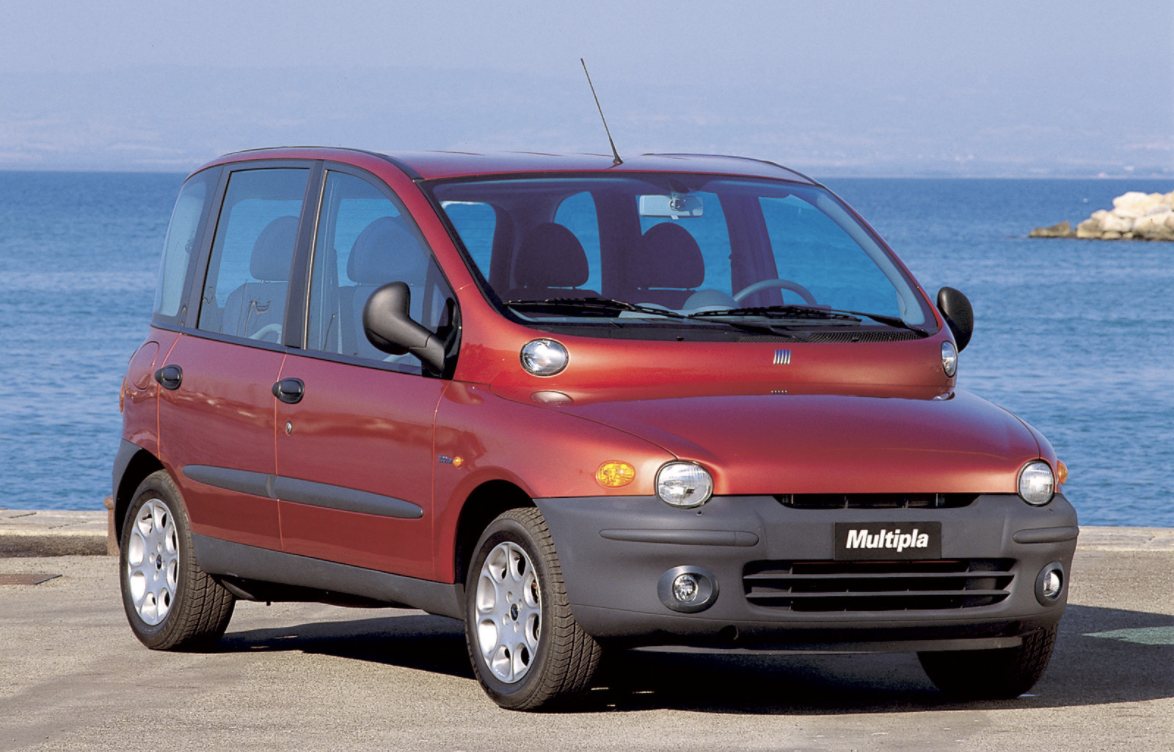
Fiat Multipla: Ugliest Car and Car of the Year

This article is part of a series on designing cyber security capabilities. To see other articles in the series, including a full list of design principles, click here.

Future-Proofing – Design Monday

Posted by

IT security leaders envision future security capabilities. Capabilities like Identity and Access Management or Threat and Vulnerability Management. Capabilities which enable the organization while disabling the attackers, built upon processes and technology. But there’s a problem. The technologies change. The threats change. Putting aside those change, we have to acknowledge that people aren’t adept at predicting the future. How do we design for the unknown while embracing our shortcomings?

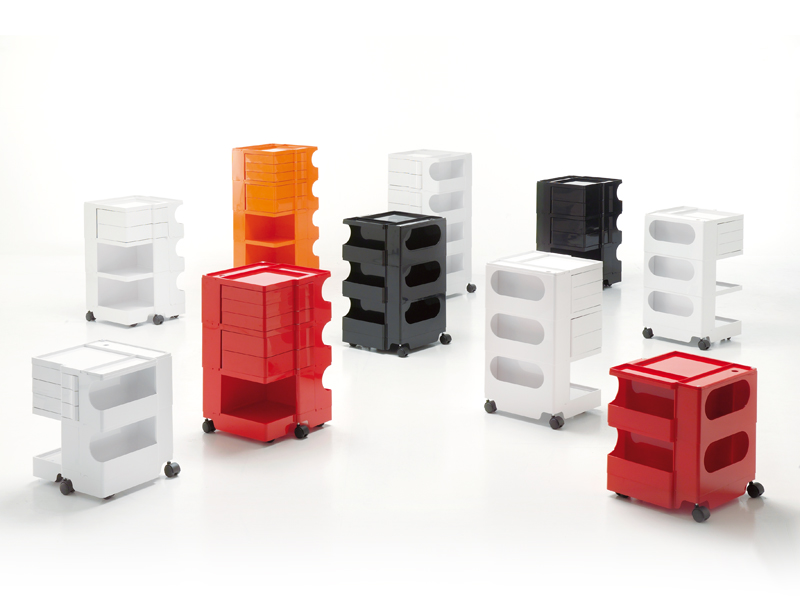
By taking a page from Joe Colombo’s book. Colombo designed a series of futuristic rooms and furniture. The main goal of his design was variability. Each piece was versatile and modular. The overall room was reconfigurable and adaptable. “My design experiences try to create an evolutionary link between current reality and future,” is how Colombo described it. Evolution favors flexibility. As it is in biology, so too in technology.

When deciding between two options, choose the one with the greater variability. This increases the possibilities for handling future threats or technologies. We won’t always get it right. Take just technology. One of Colombo’s pieces couldn’t be produced until the plastics industry caught up. It took nearly 50 years, with the 4801 Armchair finally reaching production in 2011. That said, it’s better to have an unused possibility than have a need that the design can’t meet. To future-proof a security capability, design for versatility.

The Bobby Trolly, design by Joe Colombo

This article is part of a series on designing cyber security capabilities. To see other articles in the series, including a full list of design principles, click here.
Valuing Assets – Design Monday

Posted by

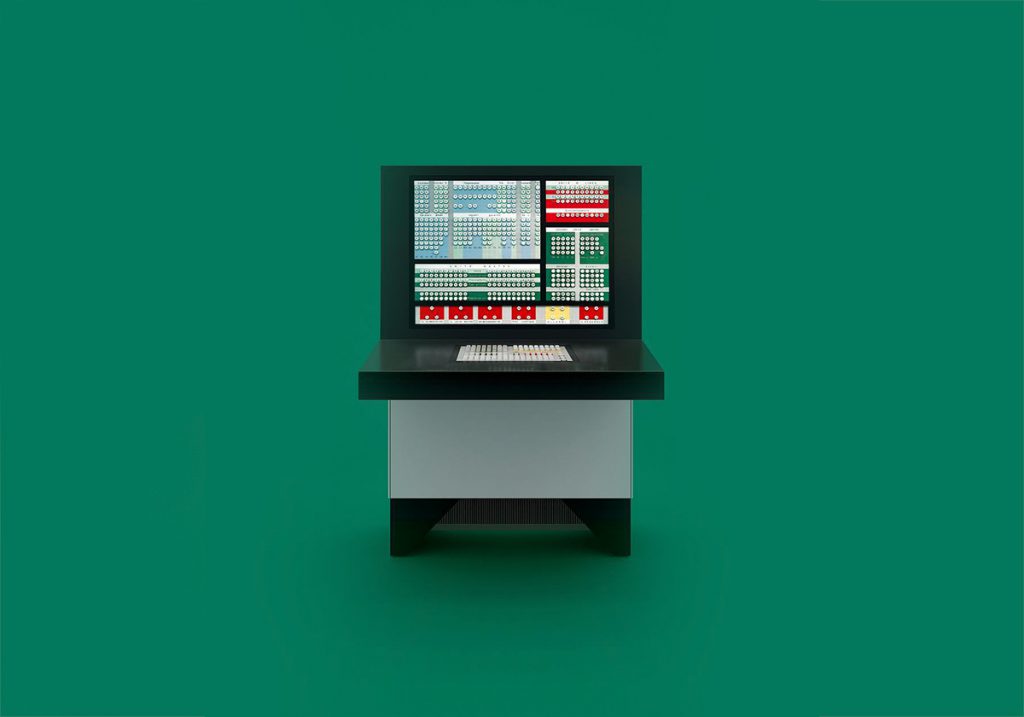
The staring red camera and chillingly calm voice of HAL 9000 inspired and unnerved a generation of IT people. It’s well known that Arthur C. Clarke drew inspiration from IBM to name HAL. But where did the 9000 come from? This traces back to the first Italian mainframe: the Elea 9000. Look at photos of the Elea 9000 and the HAL 9000 in Discovery One, and you will see some visual similarities too. The Elea 9000 had a certain beauty, owed in part to Ettore Sottsass.

Ettore Sottsass was a design consultant for Elea 9003 in the 1950s. In the 1960s, Sottsass would design the iconic Valentine typewriter. From the heights of technology, Sottsass turned his talent to furniture. Chairs. If you’re thinking that’s an odd choice, you’re not alone. Many asked him about this shift. “A chair must be really important as an object, because my mother always told me to offer my chair to a lady,” Sottsass reportedly said. And so he focused on chairs.

There is a lesson here for security. A fundamental is evaluating the value of an asset to determine what is at risk. Of the ways to determine this, the most common are what the asset generates for the organization and what it would cost the organization to replace it. Both measured in dollars. That’s great for computers and typewriters, but what about chairs? Put a different way, quantitative approaches overlook the significance people put on our tools. Securing by what we can measure in dollars leads to decisions which are blind to the human factors.

“I’m sorry, Dave. I’m afraid I can’t do that.” I get chills every time I hear that line. There’s something cold about mechanically making decisions based purely on numbers. When introducing human-centric design to our security programs, we must consider all the ways people determine value. Remember the subjective. Remember the chairs.

Olivetti Elea 9003, photography by yewknee.co,

This article is part of a series on designing cyber security capabilities. To see other articles in the series, including a full list of design principles, click here.
Principles for Designing Security Capabilities

Posted by

Security leaders have a bold vision. Leaders have a grand strategy. Leaders excite and engage people to get things done. Along the way, leaders make decisions.

To innovate within, first look outward.

This blog series is about making better decisions. IT security is a new discipline. But creativity and ingenuity are as old as humanity. Week by week, we’ll look to artisans, to architects, and to designers. We’ll uncover principles we can apply to lead and to design security capabilities.

Latest Design Article

Pilot with chaos. Cyber security is complex. The proverbial butterfly flapping its wings in Brazil producing tornado in the United States. Thankfully, we have chaos theory and security chaos engineering.

– Read the latest design article –

Cyber Security Design Principles:


Finally: Here are some of my folksy sayings on cybersecurity leadership and design.


https://jwgoerlich.com/cyber-security-design-studies-papers-books-and-resources/

Books on Design, Research, Prototyping, and Sustainability

Posted by


The Design of Everyday Things, By Don Norman (W)

The Art of Innovation: Lessons in Creativity From IDEO, America’s Leading Design Firm, (2001) By Tom Kelley and Jonathan Littma (W)

Design and Marketing of New Products, Prentice-Hall, Second Edition 1993, By Urban, G. L. And J. R. Hauser

Designing for Growth: A Design Thinking Tool Kit for Managers, By Jeanne Liedtka, Tim Ogilvie, Columbia University Press

Designing for The Digital Age: How to Create Human-Centered Products and Services, By Kim Goodwin

The Principles of Product Development Flow: Second Generation Lean Product Development, By Donald G. Reinertsen

User Experience Revolution, By Paul Boag

User Friendly: How the Hidden Rules of Design Are Changing the Way We Live, Work, and Play, By Cliff Kuang and Robert Fabricant (W)

Services

Service Innovation: How to Go from Customer Needs to Breakthrough Services, By Lance A. Bettencourt

This Is Service Design Thinking: Basics-Tools-Cases, Kindle Edition, By Mark Stickdorn

The Handbook of Service Innovation, By Renu Agarwal, Willem Selen, Göran Roos, and Roy Green

Research

Design Research: Methods and Perspectives, By Brenda Laurel

Research Methods for Product Design, By Alex Milton And Paul Rodgers

Well-Designed: How to Use Empathy to Create Products People Love, By Jon Kolko

Prototyping

Paper Prototyping: The Fast and Easy Way to Design And Refine User Interfaces, By Carolyn Snyder

Product Design and Development, By Karl Ulrich, Steven Eppinger, and Maria C. Yang

Roadmap

Product Roadmaps Relaunched: How to Set Direction While Embracing Uncertainty, By C. Todd Lombardo, Bruce Mccarthy, Evan Ryan, Michael Connors (W)

Environmental Sustainability

Design for The Environment: Creating Eco-Efficient Products and Processes, By Joseph Fiksel, Mcgraw Hill, New York, 1996

Integrating Environment and Technology: Design for Environment, In The Greening of Industrial Ecosystems, By B.R Allenby, National Academy Press, Washington, DC, 1994

Photography courtesy Pixabay.